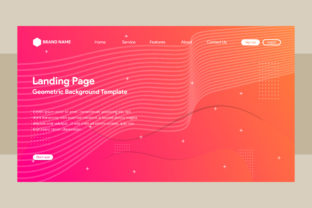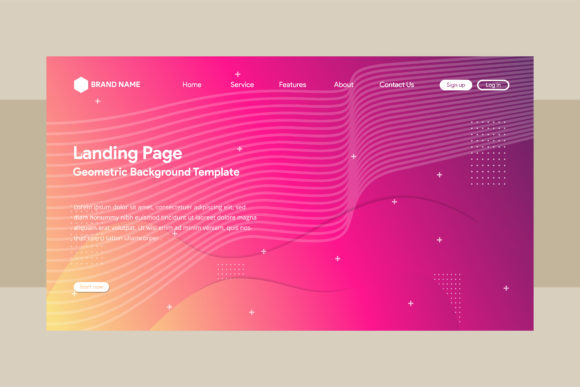
Landing Page Background Pink Line Wave
In the crowded landscape of digital design, the visual identity of a landing page often determines whether a visitor stays or leaves within seconds. The Landing Page Background Pink Line Wave represents a specific aesthetic choice that blends minimalism with dynamic movement. This vector illustration is not merely a decorative element; it serves as a structural component in UI templates and app development workflows. By analyzing its composition, we can understand how such assets influence user perception and brand positioning.
The core concept revolves around the interplay between soft pastel tones and sharp geometric precision. The "Pink Line" aspect refers to the use of linear elements that create a sense of rhythm, while the "Wave" designation indicates the fluid, undulating motion inherent in the design. This combination allows designers to break away from static grids without overwhelming the viewer with chaotic patterns. It strikes a balance between the rigidity of corporate blueprints and the organic flow of natural forms.
Visual Characteristics and Design Philosophy
At first glance, the asset appears simple, but its construction relies on sophisticated vector mathematics. The lines are typically rendered with varying opacity and thickness, creating a gradient effect that mimics depth. This technique transforms a flat 2D surface into something that feels almost three-dimensional, aligning with modern trends in 3D abstract design. The color palette usually centers on vibrant pink hues, often transitioning into softer blues or purples to create a futuristic atmosphere.
The term distorted is frequently used to describe the wave pattern. In this context, distortion does not imply error; rather, it refers to the deliberate warping of straight lines to generate organic shapes. This approach prevents the design from feeling sterile. A standard grid background can feel cold and uninviting, whereas a wavy, liquid line structure suggests flexibility and adaptability—qualities that resonate well with technology startups and creative agencies.
Key characteristics include:
- Fluid Motion: Even in a static image, the curves suggest movement, guiding the eye across the page naturally.
- Minimalist Structure: Despite the complexity of the waves, the overall layout remains clean, ensuring that text and call-to-action buttons remain legible.
- Vector Scalability: Being a vector file, the image maintains crisp edges at any resolution, from mobile screens to large-format billboards.
- Dynamic Gradients: The use of neon and light effects adds a layer of sophistication suitable for high-end digital products.
Practical Application in Web and App Development
When integrating the Landing Page Background Pink Line Wave into a project, the primary goal is usually to establish a mood before the user engages with content. For developers building mobile apps or SaaS platforms, this background acts as a subtle anchor. It provides a visual context that implies innovation and forward-thinking without distracting from the functional interface.
The versatility of this asset makes it suitable for various media types. In a brochure or magazine layout, these lines can serve as dividers between sections, replacing traditional solid borders with something more engaging. In a poster or banner design, the wave pattern draws attention to the central message, acting as a visual funnel. The curved nature of the lines helps to soften the harsh corners of rectangular containers, making the overall user experience feel more approachable.
For UI template design, consistency is paramount. The ability to repeat the pattern seamlessly ensures that scrolling users do not encounter jarring breaks in the visual flow. When used as a wallpaper for desktop interfaces or as a header for web pages, the linear elements provide a sense of order amidst the chaos of information overload. The design effectively communicates that the product behind it is both structured and adaptable.
Evaluating Quality and Usability
From a technical standpoint, the value of this graphic resource lies in its file integrity and editability. High-quality vector files allow designers to manipulate individual strokes, change colors to match brand guidelines, and adjust the density of the waves. This flexibility is crucial for maintaining brand consistency across different marketing channels. If a company rebrands from a dark theme to a light one, the underlying vector structure can be easily repurposed without losing its aesthetic appeal.
However, usability depends heavily on implementation. The vibrant nature of the pink and blue gradients means that contrast must be carefully managed. Text placed directly over areas where the lines are dense or where the background is brightest may suffer from readability issues. Professional evaluation suggests using semi-transparent overlays or strategically placing content in the negative spaces created by the waves. This requires a thoughtful approach to layout planning.
The dynamic quality of the design also lends itself well to animation. While the source file is static, the wave pattern is inherently suited for CSS animations or JavaScript libraries that can make the lines ripple or shift. This adds an interactive layer to the landing page, increasing engagement metrics. Yet, caution is advised; excessive motion can lead to performance issues or user fatigue. The key is to use the movement sparingly to enhance, not dominate, the user journey.
Audience Fit and Strategic Value
Who benefits most from the Landing Page Background Pink Line Wave? The profile fits professionals and entrepreneurs in the tech sector, particularly those in app development, digital marketing, and creative services. Startups looking to convey a sense of modernity and agility will find this style highly effective. It appeals to an audience aged 20–50 that values sleek design and intuitive interfaces.
For freelancers and bloggers, this asset offers a quick way to elevate the visual presentation of their work without requiring advanced illustration skills. It serves as a reliable template foundation that saves time during the prototyping phase. Small business owners can utilize it for promotional materials like flyers or digital ads, leveraging the futuristic aesthetic to stand out in competitive markets.
The strategic value extends beyond mere aesthetics. By choosing a background that implies liquid flow and geometric precision, brands subtly communicate stability mixed with innovation. This psychological cue can increase trust among potential customers. However, it is less suitable for industries requiring a strictly traditional or conservative image, such as legal services or financial institutions that prioritize stark seriousness over creative flair.
Limitations and Considerations
No single design asset is a universal solution. The Landing Page Background Pink Line Wave has limitations that must be acknowledged. Its strong color palette may clash with existing brand identities that rely on muted earth tones or monochromatic schemes. Adapting the pink and blue gradients might result in a loss of the original artistic intent if not handled with care.
Additionally, the complexity of the wave pattern can sometimes interfere with accessibility standards. Screen readers do not interpret visual backgrounds, but sighted users with certain visual impairments may struggle with low-contrast text against complex line art. Designers must ensure that the distortion of the lines does not create moiré patterns on high-resolution displays, which can cause visual discomfort.
Furthermore, reliance on trendy styles carries a risk of dating quickly. What is considered modern today may appear dated in a few years. To mitigate this, it is advisable to pair the vector background with timeless typography and content strategies. The background should support the message, not become the message itself.
Final Assessment
The Landing Page Background Pink Line Wave stands out as a versatile and visually compelling resource for contemporary digital projects. Its ability to merge abstract concepts with practical graphic utility makes it a valuable addition to any designer's toolkit. Whether used for a cover page, a website header, or a mobile app interface, it delivers a sense of motion and elegance that static backgrounds often lack.
While it requires careful management of contrast and branding alignment, the long-term value of such a high-quality vector asset is significant. It supports the creation of cohesive, professional-looking designs that meet the expectations of today's discerning digital audiences. For those seeking to infuse their projects with a touch of neon energy and fluid dynamics, this background offers a robust starting point for creative exploration.