Unlocking Strategic Clarity with the Cyclus of Hexagon Infographics
In the fast-paced world of modern business, information overload is a constant challenge. Decision-makers are bombarded with data, yet often struggle to visualize the connections between complex processes, strategic goals, and financial outcomes. This is where the Cyclus of Hexagon Infographics emerges as a vital tool for clarity. By leveraging a sophisticated 3D hexagonal structure, this vector illustration template transforms abstract concepts into actionable visual narratives. Whether you are a marketing strategist planning a global campaign or a finance expert presenting quarterly growth, understanding how to utilize this specific design resource can elevate your communication from simple reporting to compelling storytelling.
Understanding the Visual Power of the Hexagon Cycle
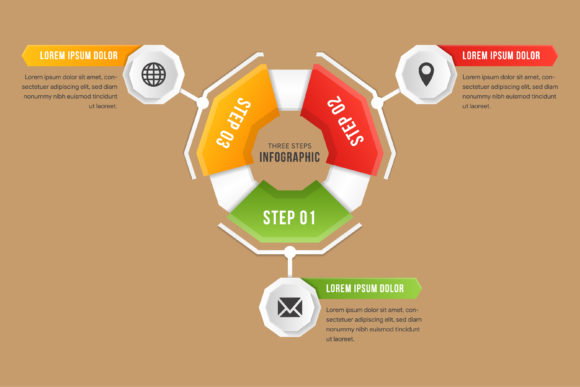
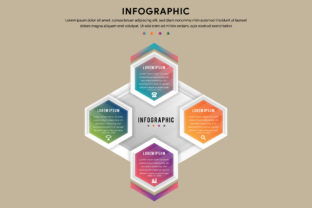
The core concept behind the Cyclus of Hexagon Infographics lies in its geometric precision and symbolic depth. Unlike standard circular charts or linear flowcharts, the hexagon offers a unique balance of stability and connectivity. The shape itself suggests strength and efficiency, while the "cyclus" or cycle aspect emphasizes continuity, progress, and the interconnected nature of business operations. When rendered in a 3D style with paper labels and gradient effects, the design gains a tactile quality that draws the viewer's eye immediately.
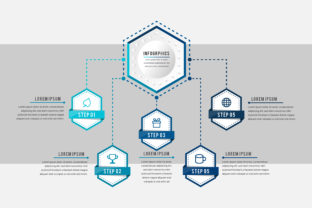
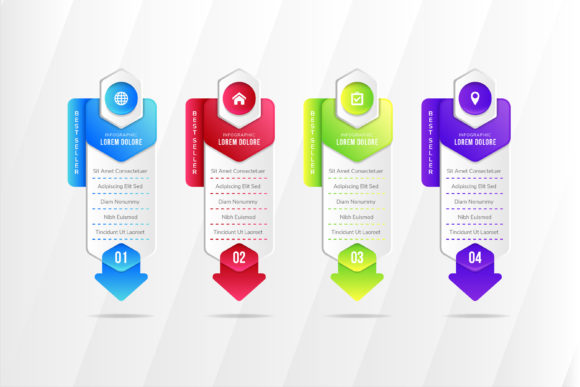
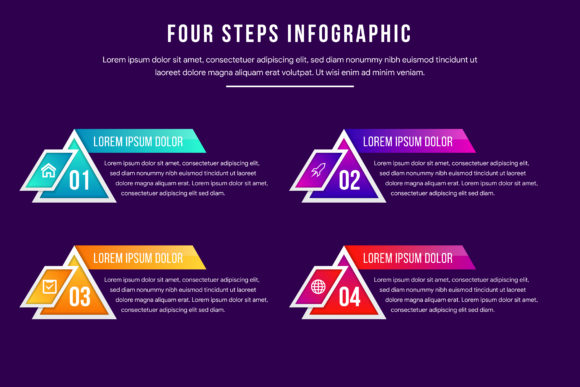
This visual approach is not merely decorative; it serves a functional purpose. The template provides a structured layout for organizing four distinct steps or stages within a larger workflow. Each hexagonal section acts as a container for specific data points, icons, or text, allowing users to map out a complete strategy without losing the thread of the overall narrative. The use of arrows and connected elements reinforces the idea that every step leads logically to the next, creating a seamless journey for the audience.
Addressing Common Business Communication Challenges
Many professionals face significant hurdles when attempting to present complex data. A common issue is the disconnect between raw numbers and strategic insight. Traditional spreadsheets or bullet-point slides often fail to capture the dynamic relationship between different departments or phases of a project. Stakeholders may miss the bigger picture, focusing on isolated metrics rather than the holistic process.
Another frequent challenge is maintaining audience engagement during long presentations. Static images and dense text blocks can lead to cognitive fatigue, causing key messages to be overlooked. There is a pressing need for designs that are both aesthetically pleasing and intellectually stimulating. The Cyclus of Hexagon Infographics directly addresses these pain points by offering a modern, vibrant alternative to conventional charting methods.
Furthermore, consistency in branding is crucial for global enterprises. Creating custom diagrams from scratch for every presentation is time-consuming and often results in inconsistent visual language across teams. A pre-designed, high-quality vector template ensures that the visual identity remains uniform while allowing for flexible content customization. This saves valuable time and ensures that the focus remains on the message rather than the mechanics of design.
Strategic Applications Across Industries
The versatility of the Cyclus of Hexagon Infographics makes it applicable across a wide spectrum of industries and scenarios. Its ability to represent cycles, strategies, and teamwork makes it an ideal choice for various professional contexts.
- Corporate Strategy and Planning: Executives can use the four-step hexagonal layout to outline a company's roadmap. For instance, one hexagon can represent market research, another product development, followed by launch strategies, and finally, performance analysis. The circular flow visually demonstrates how feedback loops improve future cycles.
- Marketing Campaigns: Marketing teams often deal with multi-channel campaigns. This infographic template can illustrate the customer journey, connecting awareness, consideration, conversion, and retention stages. The use of icons within each hexagon allows for quick identification of specific tactics like social media, email, or SEO.
- Financial Reporting: In finance, clarity regarding growth trends is essential. The 3D effect adds a layer of sophistication suitable for investor relations. It can display the progression of revenue streams or the lifecycle of an investment portfolio, making complex financial data more digestible for non-financial stakeholders.
- Process Improvement and Workflow: Operations managers can map out internal workflows using the diagram. Each hexagon represents a critical node in the production line or service delivery process. Arrows connecting the shapes highlight dependencies and potential bottlenecks, facilitating better resource allocation and efficiency.
Implementing the Template for Maximum Impact
To get the most out of the Cyclus of Hexagon Infographics, users should approach the implementation with a clear plan. The first step is to define the narrative arc. What story does the data tell? Is it about a problem-solving journey, a timeline of events, or a comparison of options? Once the story is defined, the content should be distilled into concise points. The hexagonal format works best with short, punchy text accompanied by relevant icons.
Consider the color palette carefully. The template features gradients and modern styling, so choose colors that align with your brand identity while ensuring sufficient contrast for readability. The 3D paper label effect adds depth, so avoid cluttering the design with too many competing elements. Let the structure breathe to allow the viewer to absorb the information naturally.
For digital presentations, ensure the vector graphics are scalable. Because the source is a vector file, you can resize the infographic for everything from a large conference banner to a small mobile screen without losing quality. This adaptability is crucial in today's multi-device environment where content must be accessible on web pages, PDF brochures, and live slides.
Tailoring the Approach for Different Users
Different professionals will interact with the Cyclus of Hexagon Infographics in unique ways based on their specific goals. A creative director might focus heavily on the aesthetic aspects, utilizing the gradient and 3D effects to create a striking visual centerpiece for a brochure or website. They might experiment with rotating the hexagons or altering the background patterns to match a specific theme.
In contrast, a technical writer or analyst might prioritize the logical flow. They would use the arrows and connected nodes to emphasize the sequence of operations. For them, the visual appeal is secondary to the accuracy of the process representation. They might strip away some of the decorative elements to create a cleaner, more schematic version of the diagram.
Project managers might view the template as a collaborative tool. They could use it during team meetings to assign responsibilities to each hexagonal stage, fostering a sense of shared ownership over the project's lifecycle. The visual nature of the chart helps everyone see how their individual contributions fit into the broader "cycle" of success.
Conclusion: Elevating Your Visual Communication
In an era where attention spans are short and competition for visibility is fierce, the way you present information can make all the difference. The Cyclus of Hexagon Infographics offers more than just a pretty picture; it provides a robust framework for structuring complex ideas into clear, compelling narratives. By combining the stability of the hexagon with the dynamism of a cycle, this template bridges the gap between data and decision-making.
Whether you are crafting a new business plan, explaining a financial trend, or mapping out a marketing strategy, adopting this design resource can streamline your workflow and enhance your professional output. It empowers you to move beyond static lists and embrace a visual language that resonates with modern audiences. By integrating the principles of the Cyclus of Hexagon Infographics into your daily toolkit, you ensure that your ideas are not only seen but understood and acted upon.